Vitamin B6: 1.3 mg
B6 helps more than 100 enzymes, mainly in protein metabolism, and supports brain development and immune function. Adults 19-50 need 1.3 mg a day; after 50, women need 1.5 mg and men 1.7 mg (ODS). ShapeTonic’s 1.3 mg (76% DV) covers most of that. People with kidney disease, autoimmune conditions or alcohol dependence are more often low.
The upper limit is 100 mg a day. Taking 1-6 g a day for a year or more has caused severe nerve damage, and some reports involve lower doses (ODS). Europe has set a much lower limit of 12 mg. Check high-dose B-complex and “stress” formulas if you combine products.
Vitamin B12: 6 mcg

B12 keeps nerve and blood cells healthy and helps make DNA. Adults need 2.4 mcg a day (ODS). ShapeTonic gives 6 mcg (250% DV). No harm has been linked to high intakes from food or supplements.
Groups more likely to be low: older adults (less stomach acid), people with pernicious anaemia or gut surgery, vegans and vegetarians, and people taking metformin or acid-reducing medicines for a long time (ODS).
Energy: deficiency versus top-up
Fatigue is a symptom of B12 or B6 deficiency, so correcting a deficiency can restore energy. But if your levels are normal, extra B vitamins don’t make you more energetic. That distinction is behind every “reduces tiredness” claim. More in B12 and energy.
A note for metformin users
If you take metformin, your doctor may check B12 periodically. ShapeTonic’s 6 mcg won’t correct a true deficiency, which may need larger doses or injections; tell your doctor rather than relying on a weight powder. Chromium in the same scoop may also add to blood-sugar lowering (ODS).
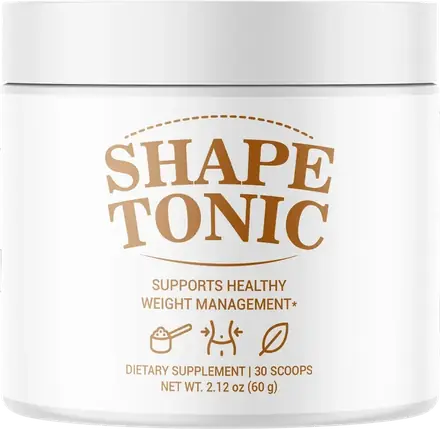
Considering ShapeTonic? Two jars are $158 plus shipping; six are $294 ($49 each) with free US shipping and three bonus guides. Only unopened jars can be refunded, and the caffeine content isn’t stated, so read the safety guide first.
Order ShapeTonic From $49/JarQuestions
Will B12 give me energy?
Only if you are low. Normal levels plus more B12 don’t add energy.
Is 6 mcg of B12 too much?
No. It is above the 2.4 mcg need, but no harm has been linked to high intakes.