Why it leads the blend
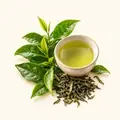
Supplement labels list blend ingredients in descending order by weight, so green tea extract is the biggest share of ShapeTonic’s 700 mg “Shape Tonic Blend”. That could mean anything from just over 175 mg (if the four parts were nearly equal) to almost 700 mg (if the other three were tiny). The label does not say which, nor whether the extract is standardised for EGCG or decaffeinated.
Green tea comes from the unfermented leaves of Camellia sinensis. Its catechins, especially epigallocatechin gallate (EGCG), and its caffeine are the compounds sold as metabolism helpers. A brewed cup holds roughly 240-320 mg of catechins and about 45 mg of caffeine (ODS).
What the weight research shows
The best summary remains the Cochrane review of 15 weight-loss and 3 weight-maintenance trials with 1,945 participants. Studies run outside Japan showed a mean difference of 0.04 kg, essentially nothing. Japanese studies reported 0.2-3.5 kg but used varied designs and could not be pooled. The authors judged the effect “small, not statistically significant, and not likely to be clinically important”.
NCCIH puts it the same way: catechins and caffeine might have a modest effect on weight, but results vary with the product and the person (NCCIH). The ODS health-professional sheet adds that most trials were short and some used caffeine alongside the extract, which makes the catechins’ own role hard to isolate (ODS).
The liver question
This is the part a sales page never mentions. LiverTox, the NIH database of drug and supplement liver injury, lists more than 100 published cases of clinically apparent liver injury linked to green tea extracts. Most appeared 1-6 months after starting, many involved multi-ingredient weight-loss products, and most people recovered after stopping; rare cases were severe (LiverTox).
NCCIH notes that liver problems are associated mainly with concentrated extract taken as pills, and that a specific immune-gene variant may raise susceptibility (NCCIH). Drinking green tea as a beverage has not raised the same concern. A powder stirred into a drink sits somewhere in between: it is an extract, but at an unknown, probably moderate, dose.
Warning signs: yellow skin or eyes, dark urine, pale stools, nausea, abdominal pain or unusual tiredness. Stop ShapeTonic and call your doctor if any appear.
Interactions worth knowing
- Green tea can reduce blood levels of nadolol, a beta-blocker.
- Extract has lowered levels of atorvastatin, a cholesterol medicine, in studies; an interaction with raloxifene has also been reported.
- The caffeine adds to coffee, tea, energy drinks and stimulant medicines.
Source: NCCIH. For more on combining products, see NCCIH’s herb-drug interaction digest.
How to think about it in ShapeTonic
If you already drink green tea, the extract adds little you aren’t getting. If you drink lots of coffee, the extra caffeine is the more practical concern; read Coffee & caffeine stacking. If you have liver disease, or have ever reacted to a green tea supplement, skip products that contain it. Everyone else can treat it as a minor ingredient with a minor effect. Compare the other blend members in The 700 mg blend, explained.
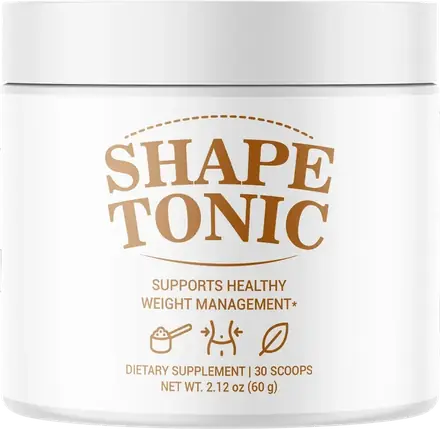
Considering ShapeTonic? Two jars are $158 plus shipping; six are $294 ($49 each) with free US shipping and three bonus guides. Only unopened jars can be refunded, and the caffeine content isn’t stated, so read the safety guide first.
Order ShapeTonic From $49/JarQuestions
Is green tea extract the same as drinking green tea?
No. Extracts concentrate catechins and sometimes caffeine; liver injury reports involve extracts, not the beverage.
Does green tea burn belly fat?
Cochrane found weight effects too small to matter in studies outside Japan.